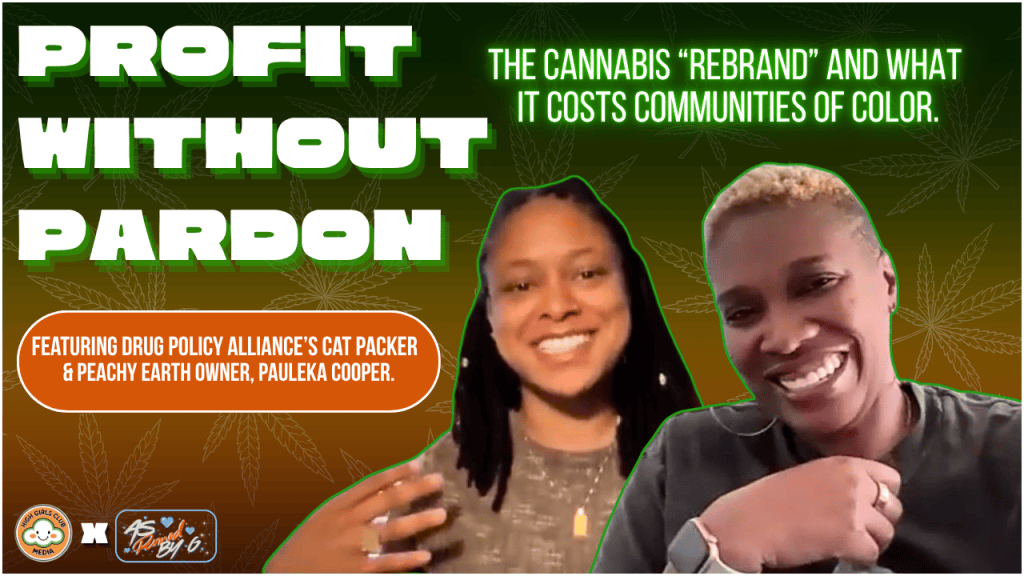
PROFIT NO PARDON?: THE CANNABIS “REBRAND” COSTS COMMUNITIES OF COLOR.
this piece was a contribution to HighGirlsClubNews.
Weed is having what could be considered an 180 moment. It’s shedding its countercultural reputation and making its way into mainstream wellness practices.
The plant has taken a turn for the better–you could say it’s undergoing a rebrand. Today, it can be found sold at sleek dispensaries or even as a luxury product.
This rebrand doesn’t erase the harms done to those who are impacted and targeted by the War on Drugs, but seems to be the way to make money within a system that still has some improvements to make.
And enjoyment of this positive, wellness-leaning transformation seems to exclude that some demographics don’t get the same privilege to enjoy the legal industry as hoped.
for decades, the mere possession of weed has fueled arrests, imprisonment, and barriers to employment. and this disproportionately impacts Black communities.
HEMP’S HISTORY.
When it comes to the role race has played in marijuana criminalization, there’s been years of debate between scholars and historians.
factually, Black people are criminalized more often than not in regards to cannabis. meanwhile, those hoping to enter the business as minorities seem to have difficulty reaping the same advantages as their white counterparts.
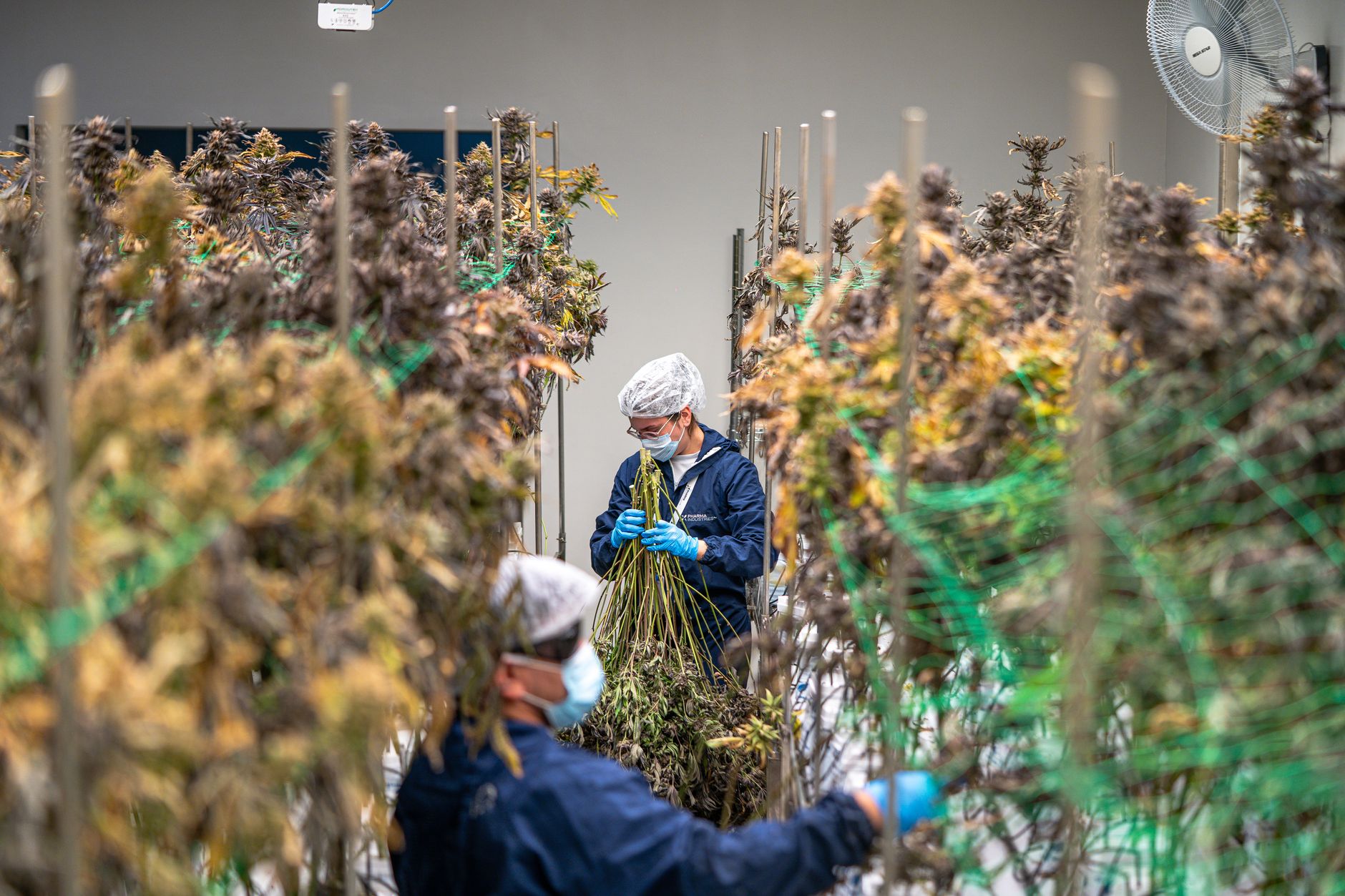
Now, weed has had a long history in America. It first arrived in the US around the 17th century, and by the 1900s, folks in charge began weaponizing the plant.
Rooted in racism and elitism, the states began outlawing weed as scholars began linking it to violence among those who, in essence, were not whites, or of a certain class.
Governmental agencies and policies became restrictive, and punishment increased in harshness.
one of the most significantly cited instances is by former President Richard Nixon’s Domestic Policy Chief John Ehrlichman.
he spoke on why this was the case around weed and other substances back in a 1994 interview with journalist and author Dan Baum.
“The Nixon campaign in 1968, and the Nixon White House after that, had two enemies: the antiwar left and Black people. You understand what I’m saying? We knew we couldn’t make it illegal to be either against the war or Black, but by getting the public to associate the hippies with marijuana and Blacks with heroin, and then criminalizing both heavily, we could disrupt those communities,” Ehrlichman said.
“We could arrest their leaders, raid their homes, break up their meetings, and vilify them night after night on the evening news. Did we know we were lying about the drugs? Of course we did.”
These actions were done to intentionally harm communities of color.
and Ehrlichman’s words still linger today as Black and Brown folks are disproportionately targeted when it comes to marijuana. data from a 2020 ACLU report found “extreme racial disparities in marijuana possession arrests persist throughout the country.”
“On average, a Black person is 3.64 times more likely to be arrested for marijuana possession than a white person, even though Black and white people use marijuana at similar rates,” the ACLU reports.
PROFIT WITHOUT PARDON.
These gaps also show up on the business side of cannabis legalization.
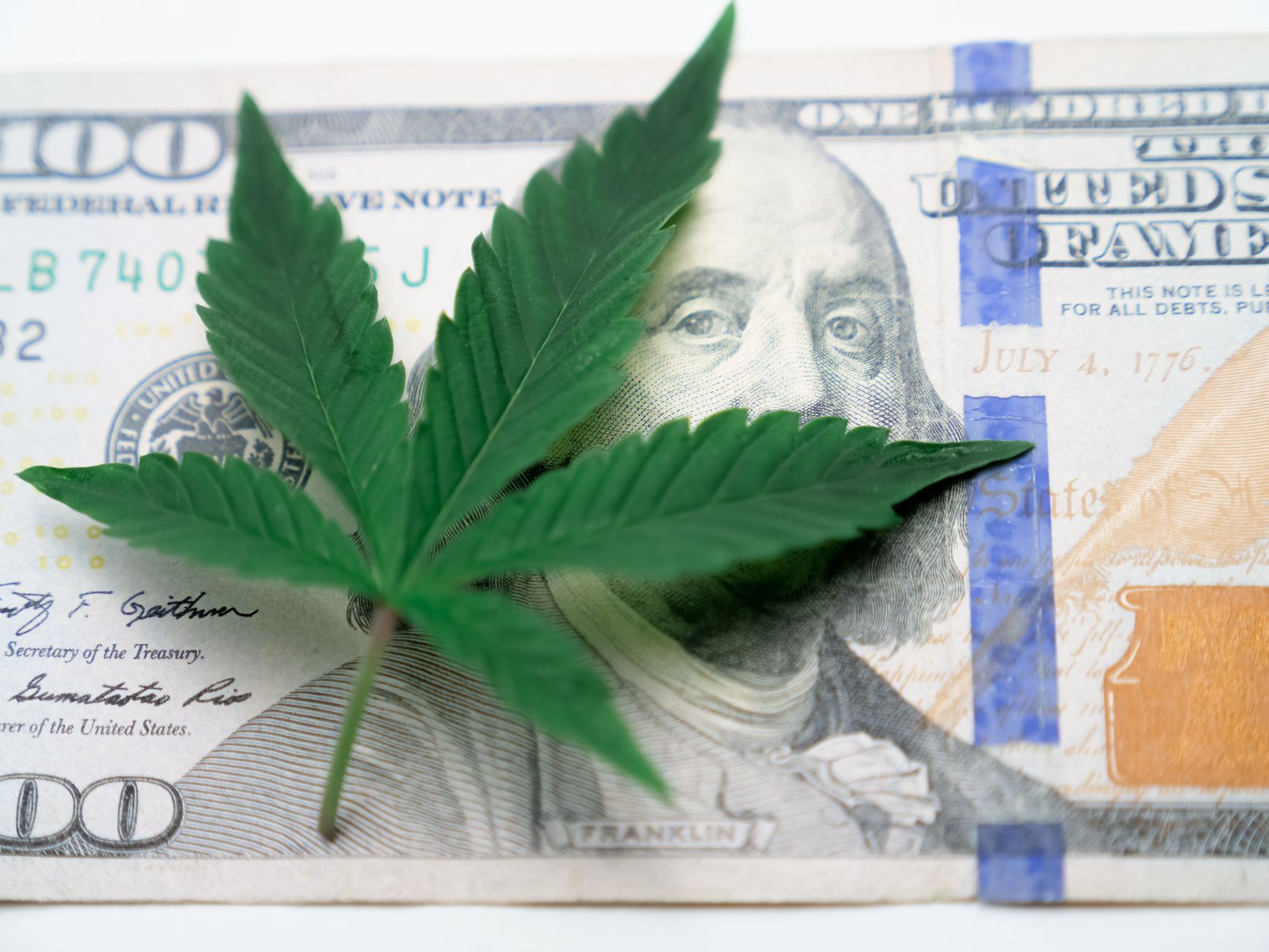
the best data available on the current cannabis business owners in the U.S. is a little dated, but a 2017 survey by Marijuana Business Daily showed white ownership of the cannabis industry at about 80%.
a 2021 Leafly Jobs Report stated “while Black Americans represent 13% of the national population, they represent only 1.2% to 1.7% of all cannabis company owners.”
Drug Policy Alliance’s Director of Drug Markets and Legal Regulation, Cat Packer, believes the benefactors of the legal industry should be more aware of these market imbalances and access.
“I don’t think that there should be any participant in this market who is not willing to on paper acknowledge the history of cannabis criminalization in this country,” Packer said.
“For the experiences of Black and Brown folks in these communities that have worked to advocate to create conditions in which these folks are not criminalized, they would not have an industry.”
Amid large ownership among white people, using cannabis and the rebrand seems to play a role in the plant sounding more acceptable.
folks, like Kelsey Engvik, encourage the use of the plant’s official name as to maintain a positive tone in the realm of wellness and medical use.
“It serves our patients to stick to science, and that includes using the proper scientific name for medications,” Kelsey Engvik said in a 2023 article for the Association of Cannabinoid Specialists. “By using the scientific name, we lend credence to the medical application of the plant.”
Engvik’s perspective reflects a broader view of how marijuana is understood.
If it sounds like wellness or health, it may be perceived as more acceptable. If the idea of weed is shifted from being negative, then it could open the door for more users, owners and opportunity.
this wellness rebrand somewhat does that, of course…but at a cost, according to Packer.
“We’ve seen an industry just be silent as different protections are taken away from consumers, different rights that are supposed to come along with legalization. It’s important that when we pass legalization, it’s not just about our ability to spend money and support capitalism, but that we actually gain rights when we pass legalization policies,” she said.
Packer believes there should be more policies in place when it comes to regulation and accessibility in the legal industry.
“We’re seeing the industry increasingly put their profits and their commercial interests over the interests of not just Black and Brown folks but consumers at large,” she said.
according to public health researcher Y. Tony Yang and colleagues (2023), several cannabis equity programs include preferential licensing policies designed to benefit business owners from marginalized communities disproportionately harmed by the War on Drugs.
their research suggests that those licensure programs have not been successful, and Packer has seen similar implications around equity programs in Ohio where she lives.
“There was money that was supposed to be set aside for community reinvestment for social equity programs, and our Republican-led legislature and governor has stripped away those funds and dedicated them to the state’s general fund,” she said.
“They were like, ‘Yeah, we should be using those money, that money to build new jails.’ I’m like, ‘There’s no way I’m participating and supporting Ohio’s legal cannabis market if every time I buy cannabis, I know that that money is going to law enforcement.”
and with weed still being illegal federally, there’s limits on who does and who doesn’t have access to available government grants or loans. this plays a role in funding access for Black owners and other entrepreneurs in today’s cannabis industry.
Meanwhile, the long-running racial wealth gap, which is fueled by systemic racism and economic terror, reinforces the need for the equity program.
“Small and Black and Brown businesses already are dealing with challenges related to disparities and gaps related to access to banking and access to land and property,” Packer said. “These programs … are trying to fill a gap that would be wholly addressed if we were just to legalize at the federal level.”
and Packer may be onto something.
In recent years, there’s been some change of heart by lawmakers as some have begun to shift how they approach marijuana policy.
earlier this year, the U.S. Drug Enforcement Administration reclassified state-legal medical cannabis from Schedule I to Schedule III under the Controlled Substance Act. the reclassification also includes FDA-approved drug products containing the plant.
and in mid-july, for a third time, the Cannabis Administration Opportunity Act was reintroduced.
The bill would take weed off of the Controlled Substances Act completely and create various aspects of cannabis reform, including public health guidelines, federal tax structure, restorative justice legislation and more.
and in the Southeast, Georgia has seen some progress despite being majorly prohibitionist.
Republican Governor Brian Kemp signed Senate Bill 220 into law back in may. the law expands the state’s medical cannabis program, lifting the limit on THC content and allowing vaping for prescribed patients.
“Why not just expand it for all of THC that’s sold in Georgia? Why just medicinal? You can kind of tell there’s a money grab from legislators. As long as it benefits them, then they’re all good for it and the medicinal dispensaries right now benefit them the most,” said Pauléka Cooper, co-founder of Peachy Earth cannabis wellness store and dispensary in Duluth, Georgia.
budding Black business.
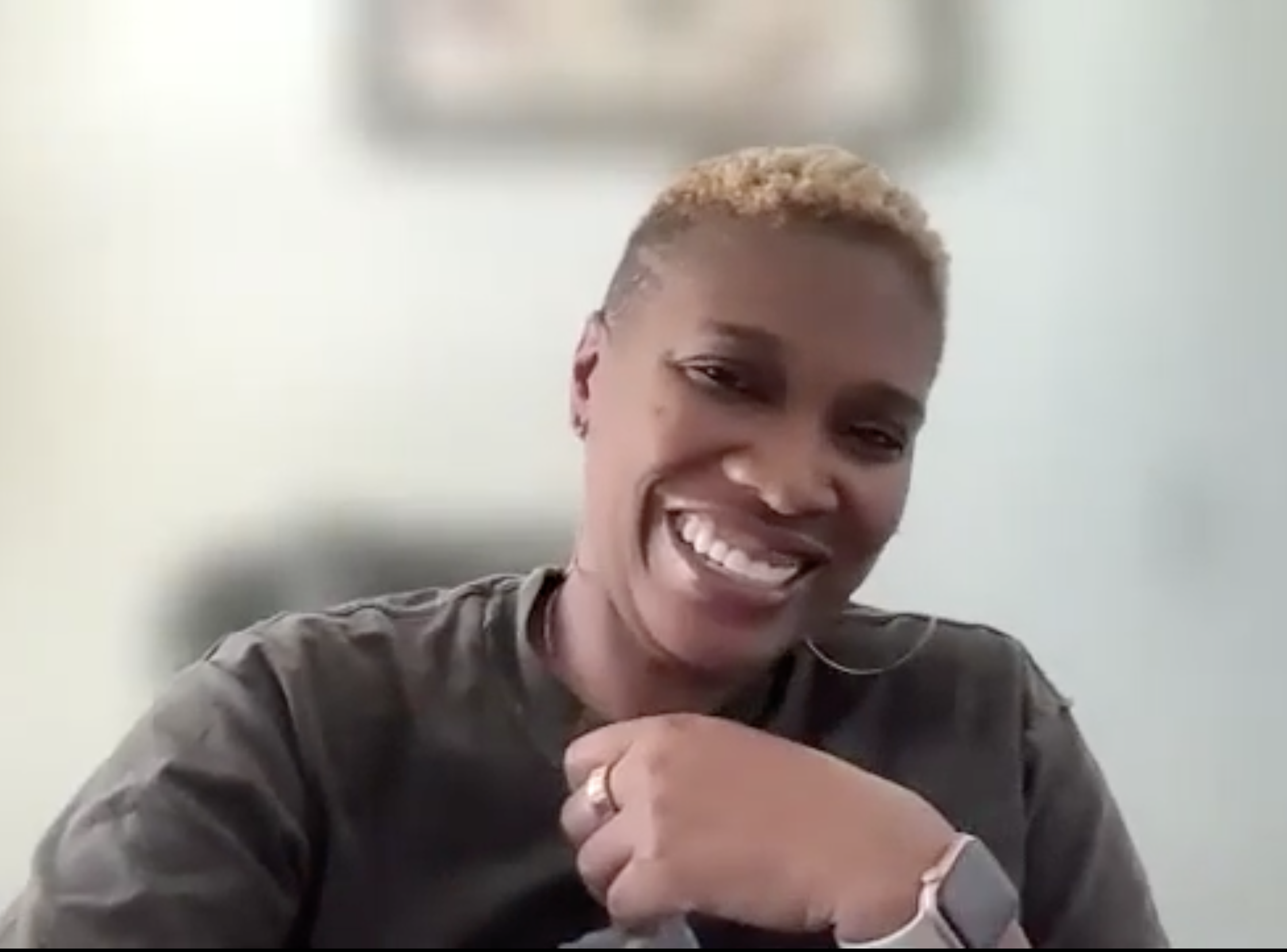
Cooper says, despite being in Georgia where the plant is illegal recreationally, she opened a dispensary alongside her husband. still, that hasn’t stopped her from making a difference in the industry as a Black-owned brand.
her company began completely online at the end of 2019, but the covid-19 pandemic slowed down business until 2024. the couple then opened a physical store. Cooper says it was hard starting out, as access to resources was a main concern.
“We have all of these white cannabis, marijuana brands that have taken off, and they have gotten the funding that is supposed to ‘not really be out there’…but they seem to have access to get it,” Cooper said.
“When people find out that you’re in this space, they kind of look at you crazy,” she said. “I feel that we get secret shoppers — people coming in — making sure that we actually have the hemp license that we’re supposed to have in the state … to be able to sell the products,” she added.
but through it all, Cooper believes her business is benefiting the local community as a place for education around the plant and health impacts.
//www.instagram.com/embed.js
Peachy Earth’s website features various products, including THC drinks and owner-brand delta-9 gummies.
The company also has a blog that provides guides, histories, and other educational content geared towards communities of color.
“We like to call ourselves a wellness brand because we like to educate our customers on how hemp affects them on a daily basis and how it can improve their mental health and how we can improve like their overall wellness as well,” Cooper said.
still, Cooper believes there is a long way to go when it comes to the legal industry.
SO NOW WHAT?
Cooper’s perspective aligns with bigger, yet growing conversation around cannabis equity: there’s more work to be done.
The shifting image of marijuana as a wellness product is definitely a positive for the legal industry. But amid this rebrand, it can be lost on people that there’s still lasting disparities facing communities of color, particularly in the South.
“Many Black and Brown folks haven’t benefited from legalization. I think part of the challenge is that we’re still fighting old drug war rhetoric and we’re dealing with fear,” said Cat Packer.
Packer believes the growing legal industry should go hand in hand with efforts to address lasting harms from criminalizing the plant in the first place.
She suggests normalizing conversation of cannabis products and usage, plus community efforts that push for full legalization.
Packer also believes the conversations around legalization amid the plant’s growing rebrand, can be overhyped, leading to difficulties with getting things done politically and economically.
“This is continuously made a political process, I think that we need to have a political response…Calm down the hype, you know, we need to have be the adults in the room for this conversation,” she said.
“I think it’s going to require us to be willing to hold folks accountable.”
this piece was edited by Zachary Bynum, Justice Insights + CBS News.
 as penned by G.
Leave a comment